
The Philippines is currently facing a growing wave of health risks as relentless heavy rains and widespread flooding fuel a nationwide spike in influenza, leptospirosis, and dengue. These diseases are now expected to worsen with the looming onset of La Niña later this year, according to a major health maintenance organization (HMO).
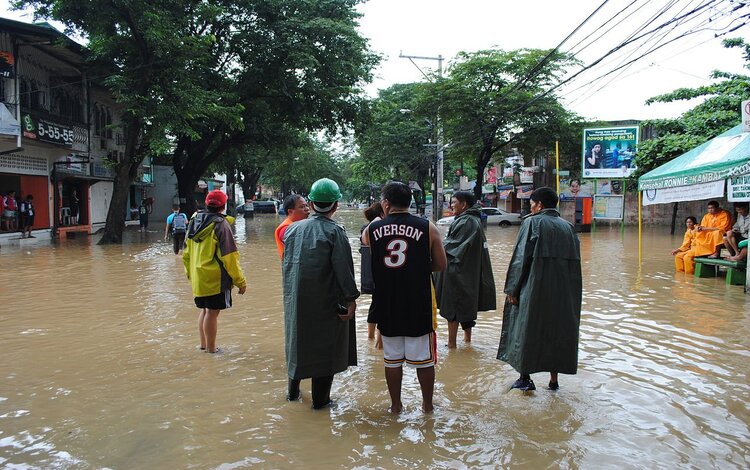
Drawing from internal claims data collected across the country in recent months, leading HMO provider PhilCare has issued a stark warning that persistent monsoon rains, poor sanitation, and crowded public transport have created “a perfect storm” for disease transmission. The company’s medical team reported that pneumonia and influenza-like infections are rising sharply, with leptospirosis and dengue cases climbing in tandem—a clear sign that extreme weather is compounding public health risks.
PhilCare’s surveillance data, which analyzed 11,597 flu and pneumonia-related claims nationwide, reveals that urban centers have the highest concentration of cases. Region IV-A (Calabarzon) accounts for 32.91% of cases and the National Capital Region (NCR) for 31.40%, representing nearly two-thirds of all reported infections.
“What we’re seeing is not just a seasonal flu outbreak, but a convergence of environmental, infrastructural, and public health factors that are creating ideal conditions for multiple infections to spread simultaneously,” said Dr. Eilyn Evora-Ayuste, PhilCare Medical Director.
She explained that heavy rains and flooding since June have increased exposure to respiratory illnesses due to cooler, damp conditions. Simultaneously, stagnant floodwaters have created ideal breeding grounds for dengue-carrying mosquitoes and sources of leptospirosis infection.
This challenging situation is projected to intensify as the Department of Science and Technology’s Philippine Atmospheric, Geophysical and Astronomical Services Administration (DOST-PAGASA) forecasts a 70% chance of a La Niña event from October 2025 to February 2026. Historically, La Niña brings heavier rainfall, cooler temperatures, and consequential spikes in respiratory and waterborne diseases.
Beyond geographical concentration, PhilCare’s data highlights the vulnerability of high-risk populations: 73% of flu and pneumonia cases involve dependents—mostly children and the elderly covered by their principal members.
“Our data shows that it’s not just the workers getting sick, but their families, particularly children and elderly parents who may have weaker immune systems,” Dr. Ayuste noted. “This affects both household health and workplace productivity, as employees take time off to care for them.”
The medical team identified key drivers of the surge: poor sanitation in flood-hit areas, severely overcrowded public transport, limited access to preventive care, and cooler weather that allows viruses to survive longer. Dr. Ayuste stressed that the combination of crowded commuting and the inability of symptomatic workers to afford staying home creates an ideal environment for community transmission.
To mitigate these escalating risks, PhilCare urged corporate clients to immediately revisit workplace health policies. Recommendations include offering flexible work-from-home options for symptomatic employees, improving health information dissemination, and critically, expanding vaccination benefits to cover influenza and pneumococcal shots.
Citing data from the U.S. Centers for Disease Control and Prevention (CDC), PhilCare emphasized that flu vaccination can reduce ICU admissions by 82% and adult hospitalizations by 40%. “Despite strong evidence of vaccine effectiveness, we continue to see low uptake among Filipino employees—partly due to cost concerns and lack of awareness,” Dr. Ayuste stated.
“We’re urging employers to see vaccination as a strategic investment in workforce health and business continuity, especially as we head into several months of challenging weather.” The crisis, PhilCare concluded, underscores the immense value of proactive health surveillance in guiding both public and private sector responses to evolving climate-driven health threats.