
A distinctive and highly symbolic United States Boeing E-4B “Doomsday Plane” made an unexpected appearance at the Ninoy Aquino International Airport (NAIA) in Manila on Sunday, prompting keen public interest. The aircraft, which serves as a command center for the US Secretary of Defense and is designed to withstand a nuclear blast, landed for what the Philippine Air Force (PAF) described as a routine diplomatic layover.
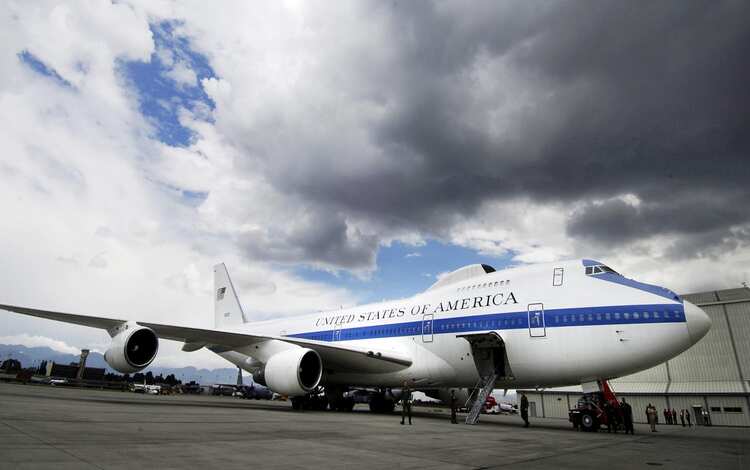
The E-4B, often referred to as the “National Airborne Operations Center,” touched down at NAIA and remained overnight. In an official statement on Monday, the PAF clarified that the aircraft was in the country “for refueling and crew rest,” and that its presence carried “diplomatic clearance.” Importantly, the PAF spokesperson, Col. Maria Christina Basco, emphasized that the stopover was not associated with any VIP visit to the Philippines.
The Philippine Air Force closely monitored and assisted the crew during their brief stay. The colossal four-engine jet, a modified Boeing 747-200, is a vital component of America’s strategic defense infrastructure, ensuring that top US defense leaders can remain airborne and in command during a worst-case scenario, such as a large-scale conflict or a nuclear attack.
This high-profile, albeit brief, visit coincided with a significant period of US diplomatic activity in the region. The stopover occurred just as US President Donald Trump was en route to Japan for the second phase of his multi-nation Asia tour, which was set to conclude with a crucial meeting with Chinese leader Xi Jinping.
The E-4B departed from NAIA on Monday morning, with Col. Basco confirming the aircraft took off at approximately 11:38 a.m. While the PAF maintained the stopover was purely technical and diplomatic, the sight of the unique “Doomsday Plane” in Manila underscored the Philippines’ strategic importance and the ongoing, active nature of US military and diplomatic logistics within the Asia-Pacific region. Its brief presence served as a potent, if silent, reminder of the complex geopolitical landscape and the operational readiness of US strategic assets.