
The Philippine Center for Investigative Journalism (PCIJ) has released a stunning report indicating that 11 current and former congressional representatives from Cebu collectively received an estimated P83 billion in infrastructure funds from the Department of Public Works and Highways (DPWH) between 2023 and 2025.
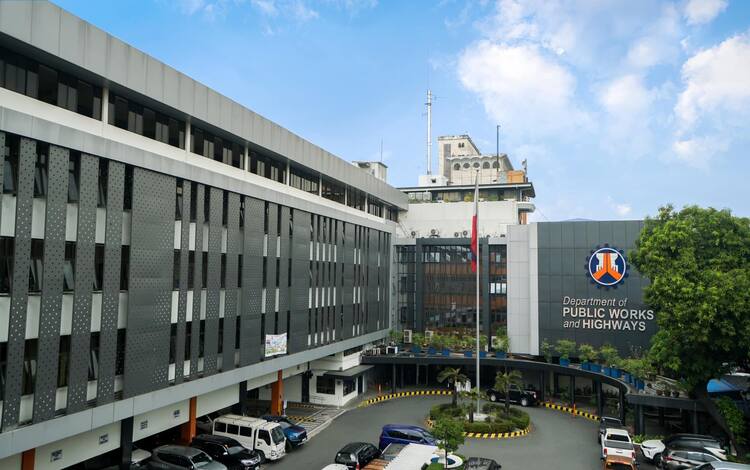
These massive allocations, critics argue, represent a modern iteration of the unconstitutional “pork barrel” funds, raising serious concerns about political influence overriding public need in infrastructure development.
The Two Faces of DPWH Funding: Allocables and Non-Allocables
The controversy centers on the opaque mechanisms used by the DPWH—the agency responsible for building vital national infrastructure—to distribute its budget. PCIJ’s findings suggest a significant portion of this budget is categorized into “allocables” and “non-allocables,” both of which have been flagged as avenues for political maneuvering.
1. Allocables: The Legislator’s Discretionary Funds
Allocables are described as discretionary funds assigned to specific congressional districts. They function much like the outlawed Priority Development Assistance Fund (PDAF), allowing lawmakers to choose projects from a “menu” presented by local DPWH district engineers.
- Opaque Formula: While the amounts are ostensibly based on population and district size, the precise formula is guarded—known only to former DPWH Undersecretary Cathy Cabral—leading critics to label the distribution as “politically motivated.”
- Executive Admission: Even incumbent DPWH Secretary Vince Dizon has conceded he does not fully understand the system, vowing to scrap both allocable and non-allocable funds in the 2027 budget proposal.
- Cebu’s Top Recipient: Representative Rhea Mae Gullas of Cebu’s 1st District emerged as the top beneficiary, receiving an estimated P8.3 billion in allocables over the three years, securing a spot in the nationwide top 10 recipients.
The other top Cebu recipients of allocable funds from 2023-2025 include:
| Congressional District | Representative | Total Allocables (Approx.) |
| 5th District | Vincent Franco “Duke” D. Frasco | P6.63 billion |
| 3rd District | Pablo John “PJ” F. Garcia | P6.05 billion |
| Cebu City 2nd District | Eduardo R. Rama Jr. | P5.75 billion |
| 4th District | Janice Z. Salimbangon | P5.31 billion |
| Lapu-Lapu City | Ma. Cynthia K. Chan | P5.24 billion |
Unlike the old PDAF, allocables are reportedly itemized and decided upon before the budget is enacted. Lawmakers submit their chosen projects, which are then integrated into the National Expenditure Program (NEP) and the General Appropriations Act (GAA).
2. Non-Allocables: An Avenue for Lobbying and Kickbacks
Non-allocables are DPWH-led projects, such as national highways, major flood-control systems, and foreign-assisted programs, which are technically not part of a legislator’s discretionary pool. Cebu districts received a total of P16.21 billion in this category from 2023 to 2025.
However, former officials and lawmakers have testified that Congress members and executive officials often insert projects into this category. This dynamic, according to the report, creates another avenue for influence, with contractors allegedly paying advance kickbacks to secure these big-ticket infrastructure projects. While lawmakers cannot directly “spend” non-allocables, they can lobby vigorously for projects in their specific districts, leading to a potentially politically motivated distribution.
The Problem of Skewed Distribution
The PCIJ report’s analysis of the combined funds reveals a deeply uneven distribution that appears disconnected from population or need.
- The Disparity: Cebu’s 1st District received a total of P13.95 billion in infrastructure funds (allocables and non-allocables), which is nearly three times the P4.72 billion allocated to the 2nd District.
- Population Context: The 1st District has a population of around 400,000 residents, while the 2nd District has roughly 330,000 residents.
This stark difference highlights a system where political influence appears to guide infrastructure funding more than population size, poverty levels, or actual community requirements.
Calls to Scrap the ‘New Pork’
Concerned civil society groups, including the People’s Budget Coalition (PBC), are demanding that the government immediately scrap these “new pork barrel” funds.
PBC stresses that the current mechanism has entrenched a system where legislators can negotiate budget slices regardless of technical or regional needs. They argue that the supposed formula for equitable distribution is non-existent in public documents or the GAA, reinforcing the secretive and political nature of the funding.
“The system of allocable funds had allowed legislators to secure infrastructure funds that mirror the old Priority Development Assistance Fund mechanism outlawed by the Supreme Court in 2013,” the PBC stated.
The coalition further noted that some smaller district offices have cornered a disproportionately large allocable budget, bolstering the argument that these funds are driven by political clout rather than objective criteria.