
Filipino content creator Jack Argota admitted that the medical certificate he shared online involving President Ferdinand “Bongbong” Marcos Jr. was fabricated, following his appearance at the National Bureau of Investigation (NBI) Cybercrime Division on Wednesday, February 18. Argota arrived at the agency’s office in response to a subpoena issued against him as authorities continue their investigation into the viral post.
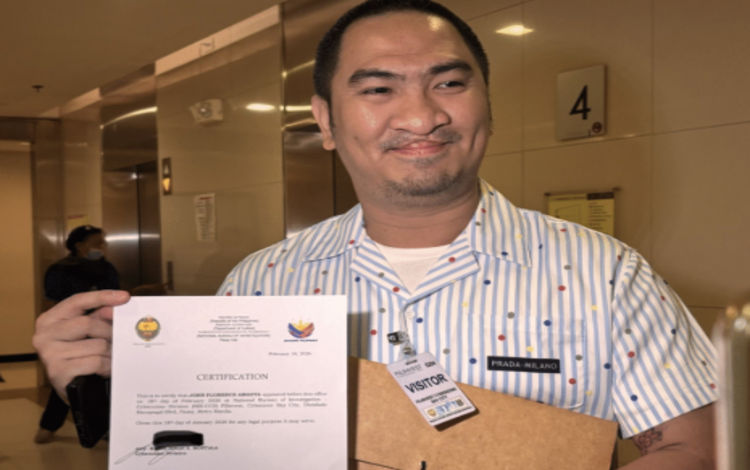
During an ambush interview, Argota openly acknowledged that the document he uploaded was fake. He explained that he created and posted the content mainly to gain attention and increase engagement on his social media platforms. According to the content creator, he wanted to keep up with trending online topics and believed his followers understood his posts were meant to be humorous.
Argota also revealed that he used an artificial intelligence tool to enhance the contents of the fabricated medical certificate before posting it online. However, he later noticed inaccuracies within the document. Despite admitting his mistake, he stated that he does not fully regret his actions, though he recognized that he should have verified the authenticity of the content before sharing it publicly.
In his message addressed to President Marcos, Argota expressed concern for the leader’s health. He said, “Para kay Marcos, masasabi ko lang sa kaniya: Pagaling ka, palakas ka, tapusin mo termino mo… Huwag ka munang mamamatay.” He also issued an apology, explaining that he was carried away by his emotions when he posted the content.
As of now, no formal charges have been filed against Argota, but the NBI continues to evaluate possible violations related to the spread of false information. Authorities are examining whether his actions may have breached cybercrime or misinformation laws.
Meanwhile, the Palace responded firmly to the issue during a press briefing. Claire Castro, Press Officer of the Presidential Communications Office, emphasized that creating content should not come at the expense of public trust and national interest. She stressed that spreading false information is not a joke, particularly when it can mislead the public and potentially affect national stability.
Castro underscored that the government remains committed to combating fake news and warned that issuing an apology does not automatically exempt individuals from legal consequences. She added that it would ultimately be up to the NBI to determine whether laws were violated and if charges would be pursued.
The controversy has reignited discussions about the responsibilities of online content creators and the growing concern over misinformation on social media platforms. The case also highlights the increasing involvement of law enforcement agencies in monitoring digital content to protect the public from misleading information.