
The Philippine Institute of Volcanology and Seismology (Phivolcs) announced that aftershocks from the magnitude 6.9 offshore earthquake that jolted northern Cebu on September 30 will continue until December. However, officials assured the public that these tremors are weakening and pose no need to delay reconstruction efforts in the affected areas.
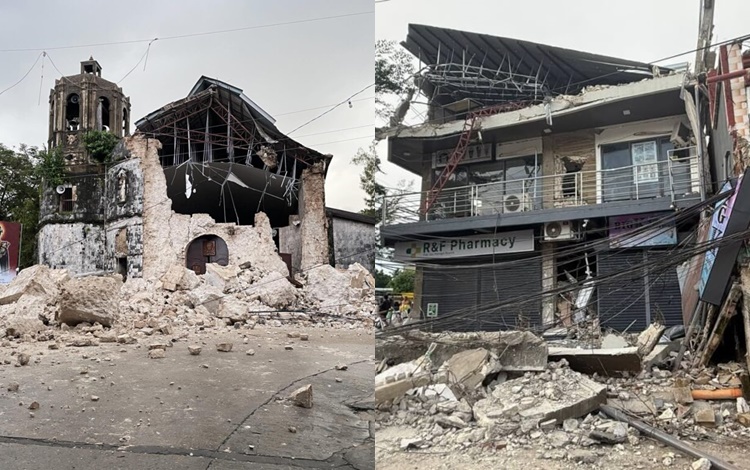
Phivolcs Director Teresito Bacolcol, in an interview with SunStar Cebu on Tuesday, October 7, said the series of aftershocks following the major quake is part of normal seismic activity. “Mahihina na yung mga aftershocks several weeks. No need to postpone,” Bacolcol stated, emphasizing that rebuilding operations can safely proceed.
According to Phivolcs, a total of 1,853 aftershocks were recorded on the day of the earthquake, September 30. The seismic events have since shown a steady decline, dropping to around 1,400 on October 1 and 2, then further decreasing to 849 by October 6. By December, Phivolcs expects the daily number of aftershocks to fall between 20 and 40.
Bacolcol explained that aftershocks are natural adjustments of the fault system after a strong quake. Typically, these secondary tremors are one magnitude lower than the main event. Any seismic activity stronger than the main shock cannot be considered an aftershock, he added.
Despite ongoing tremors, Bacolcol warned against rebuilding structures directly on top of the Bogo Bay Fault, which was confirmed as the source of the earthquake. Phivolcs reiterated its recommendation to maintain a five-meter buffer zone on both sides of the fault to prevent structural damage or loss of life in the event of future seismic movements.
The National Disaster Risk Reduction and Management Office (NDRRMO) reported that at least 733 infrastructures sustained varying degrees of damage following the magnitude 6.9 earthquake. These included residential buildings, schools, and public facilities in northern Cebu.
Phivolcs noted that the recent spike in detected aftershocks can be attributed to the country’s expanded seismic monitoring network. “In 2013, we had only 70 seismic stations nationwide. Now, we have 125, allowing us to detect more small quakes that would have gone unnoticed before,” Bacolcol said.
The September 30 earthquake was the first major seismic event to strike Cebu in over 400 years, originating from the newly identified Bogo Bay Fault Line.