
The arrest of former President Rodrigo Duterte has been linked by former Narvacan, Ilocos Sur mayor Luis “Chavit” Singson to Duterte’s outspoken criticisms of the 2025 General Appropriations Act (GAA), a claim that has sparked renewed political debate and strong rebuttal from Malacañang.
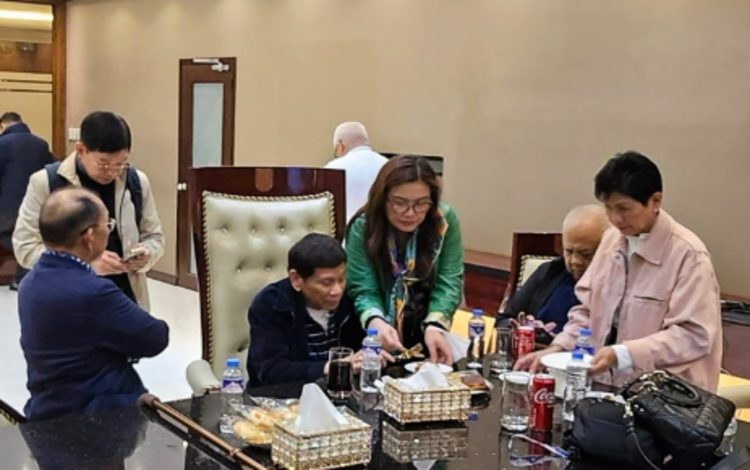
Speaking at a press conference on Monday, Singson alleged that Duterte became a target after questioning the integrity of the 2025 national budget, particularly his assertion that it contained so-called “blank” items. According to Singson, Duterte’s stance threatened powerful interests and ultimately led to efforts to “silence” him.
“Bongbong Marcos needs to silence Duterte, the critic of the 2025 GAA,” Singson said, while showing video clips of Duterte’s arrest on March 11, 2025. He further claimed that at the time of Duterte’s arrest, there was initially “no warrant of arrest,” alleging that the document was issued only later.
Earlier in January last year, Duterte released what he described as a “legal opinion” supporting claims by Davao City 3rd District Representative Isidro Ungab that the 2025 GAA had been signed despite serious irregularities. Duterte’s remarks fueled public discussion over transparency in the budget process and drew both support and criticism from various political groups.
However, Malacañang swiftly rejected Singson’s accusations. Palace Press Officer Undersecretary Claire Castro expressed concern over what she described as a “made-up story” aimed at damaging the President’s credibility.
“Nalalaman ng taumbayan ang totoong makabayan o ang nais lang ay iangat ang pansariling kapakanan,” Castro said in a message to reporters, stressing that the public can distinguish genuine patriotism from personal political motives.
She added, “Mas nakakabahala ay gumagawa-gawa na lamang sila ng kwento para ibagsak ang Pangulo. Matapos na hindi makinabang at hindi mapagbigyan sa hiling ay maninira na sila,” accusing Duterte’s allies of spreading false narratives after failing to gain political advantage.
Beyond the political controversy, Duterte continues to face serious legal challenges abroad. He is currently detained at the Scheveningen Prison in The Hague following an arrest warrant issued by the International Criminal Court (ICC) over alleged crimes against humanity connected to his administration’s bloody war on drugs. The case includes three counts of murder involving 49 killings.
Although Duterte’s camp has argued that he is medically unfit to stand trial, the ICC last November rejected his appeal for interim release, ordering that he remain in detention while the proceedings continue. As legal battles unfold and political tensions rise, the former president’s fate remains a central issue in both domestic and international arenas.