
The children of former president Rodrigo R. Duterte have renewed their appeal before the Supreme Court (SC), urging the high court to order their father’s return to the Philippines from The Hague, Netherlands, where he has been detained by the International Criminal Court (ICC) since March last year.
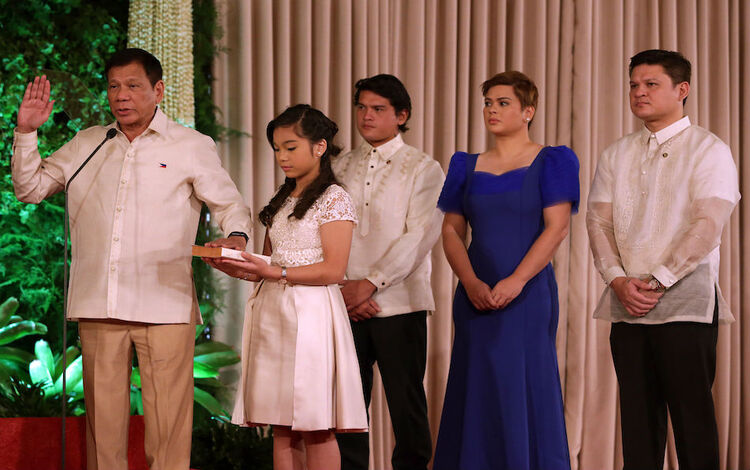
In memoranda filed in connection with their petitions for habeas corpus, Davao City Rep. Paolo “Polong” Duterte, Davao City Mayor Sebastian “Baste” Duterte, and Veronica “Kitty” Duterte argued that the arrest, surrender, and continued detention of their father were illegal and unconstitutional. The SC had earlier directed the parties to submit written memoranda to support their respective positions.
Former president Duterte was arrested on March 11 last year and flown to The Hague the same day following an ICC arrest warrant charging him with crimes against humanity linked to his anti-drug campaign during his terms as Davao City mayor and as president.
In their pleadings, the Duterte siblings invoked both Philippine and United States jurisprudence to support their claim that the Philippine government retains responsibility for their father’s detention and has the authority to seek his return. They cited the landmark US Supreme Court ruling in Boumediene v. Bush (2008), where the court recognized that the constitutional privilege of habeas corpus could extend even to foreign detainees held outside US territory.
Sebastian Duterte argued that although his father is physically detained in the Netherlands, his situation is the direct result of the Philippine government’s actions and continued cooperation with the ICC. “To hold otherwise would allow the State to evade constitutional scrutiny simply by transporting a citizen across a border,” he warned, calling such a result dangerous for constitutional rights.
Veronica Duterte also pointed to the 2025 US case of Noem v. Abrego Garcia, where an American court ordered the return of a foreign national who had been forcibly transferred abroad, and the 1919 Philippine case Villavicencio v. Lukban, in which the SC ruled that authorities could not defeat a habeas corpus petition by relocating detainees beyond the court’s immediate reach.
Paolo Duterte stressed that the issue is of historic importance, noting that this is the first time the Philippine government has surrendered a former president to an international tribunal. He said the SC has a duty to determine whether the arrest and surrender were lawful.
The Office of the Solicitor General, however, maintained that the petitions should be dismissed for being moot, arguing that since Duterte is now in ICC custody abroad, any SC ruling would be unenforceable and therefore without practical effect.
The high court has yet to rule on the case.