
MANILA, Philippines — A copy of Senator Chiz Escudero’s budget insertions in the proposed ₱6.3-trillion 2025 national budget reveals an eye-popping ₱142.7 billion in allocations, predominantly focused on infrastructure projects. According to Politiko News Site, which obtained the document, road projects topped the list with a staggering ₱52.7 billion spread across 912 projects nationwide.
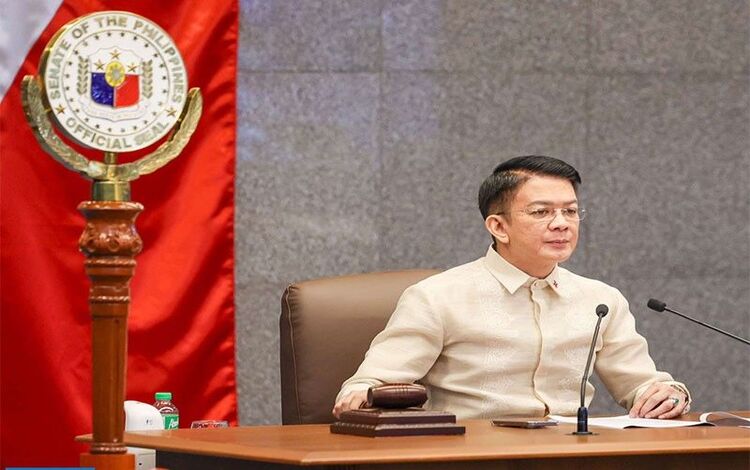
What has raised eyebrows among budget watchdogs and the public alike is the striking uniformity of allocations: 164 road projects received exactly ₱100 million each. These include construction, rehabilitation, slope protection, and bypass roads—suggesting a potentially templated approach that may lack thorough, context-based planning.
Following roadworks, building infrastructure took ₱38.7 billion, flood control projects were given ₱35.1 billion, and street lighting initiatives received ₱11.1 billion. Bridges got ₱3.8 billion, while the remaining ₱1.3 billion went to miscellaneous developments such as water systems, airport upgrades, and laboratory equipment purchases.
Among the biggest beneficiaries is Bulacan, which received ₱12 billion—significantly higher than other provinces. Bulacan is the home province of Senator Joel Villanueva. Within this total, ₱900 million was allocated to barangay-level road projects, sparking criticism over perceived overfunding for small communities. For instance, Barangays Bigte and Minuyan in Norzagaray, with a combined population of just over 13,000, were granted ₱100 million each for road construction.
Even more questionable was the ₱25 million allocated for a short road stretch near Pinalagdan Elementary and High School. The proximity of the schools to the main road makes the allocation appear unnecessary or exaggerated.
Concerns are also mounting over vague project labeling. The term “Package”—a catch-all designation devoid of geographic specificity—is the most frequently used tag. The ₱500 million allocated to the Sta. Rita–Biak na Bato Road in San Miguel, Bulacan, was divided into five ₱100-million “packages.” A similar structure was applied to the Umpucan–Sumandig Road in San Ildefonso.
This practice is not unique to Bulacan. In Batangas, the Lobo Bypass Road was listed twice at ₱100 million each. In Benguet, the Baguio–Bontoc Road appeared three times with ₱125-million tags and minimal distinctions in kilometer markings. Likewise, the Calamba–Sta. Cruz–Famy Junction Road had overlapping entries totaling ₱150 million.
These budget anomalies come amid earlier allegations of pork barrel misuse in the Senate. Former Finance Undersecretary and UP professor Cielo Magno recently accused Senator Robin Padilla of unconstitutional pork practices. In a 2025 campaign video, Padilla boasted about funneling national infrastructure to his father’s hometown in Camarines Norte and promised similar efforts in Nueva Ecija should his brother win local office.
Magno labeled the video “clear evidence of pork barrel,” denouncing senators for acting as project allocators rather than lawmakers. She emphasized that such practices breach constitutional principles and undermine transparency.
As scrutiny intensifies, Escudero’s extensive budget insertions—particularly the patterned allocations and vague project descriptors—are drawing comparisons to pork barrel politics, fueling growing demands for legislative accountability and budgetary reform.