
Senator Rodante Marcoleta stirred controversy after declaring that retired Supreme Court justice Antonio Carpio is “already guilty” of treason in connection with a 2011 ruling related to the country’s territorial waters.
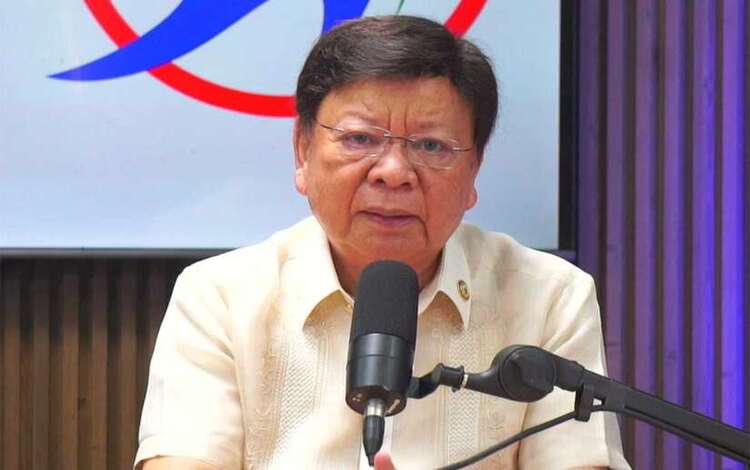
Marcoleta made the remarks during an interview aired on Net 25’s public affairs program Sa Ganang Mamamayan on February 16. The senator alleged that the decision written by Carpio contributed to the Philippines losing more than 244,000 square miles of its territorial sea.
According to Marcoleta, the ruling undermined national sovereignty and violated constitutional provisions protecting the country’s territory. He explained that while he had previously threatened to file a treason case against the former magistrate, he now believes legal action may not be necessary.
“I thought this person had a broad understanding. What I meant was that I already consider him guilty of treason,” Marcoleta said in Filipino during the televised interview. He added that even a young student would understand that surrendering national territory is unacceptable, emphasizing that territorial waters form part of a nation’s sovereignty.
The senator also compared the country’s total land area of about 300,000 square kilometers to what he described as the significantly larger maritime territory affected by the ruling. He cited calculations estimating the Philippines’ territorial sea at approximately 274,136 square miles, arguing that losing a portion of it would be detrimental to national interests.
Carpio, however, strongly rejected the allegations. The retired justice clarified that treason, under Philippine law, can only be committed during wartime. He stressed that the legal definition of treason requires an act of betrayal against the state while the country is engaged in armed conflict.
Responding to Marcoleta’s threats, Carpio said that even first-year law students understand that treason charges cannot apply during peacetime. He further suggested that if the senator intends to pursue the case, lawmakers would first need to amend existing provisions in the Revised Penal Code to broaden the scope of treason.
The exchange between the two prominent figures has sparked public debate, with legal experts and political observers weighing in on the interpretation of sovereignty, maritime rights, and the limits of criminal liability for government officials and jurists.
As discussions continue, the issue highlights the complexities of maritime law and constitutional interpretation in the Philippines, particularly as the country navigates sensitive territorial concerns and international legal frameworks.