
Researchers from the University of the Philippines Diliman (UPD) have developed an artificial intelligence (AI) model designed to predict rainfall from tropical cyclones (TCs) with greater speed and efficiency compared to conventional forecasting methods.
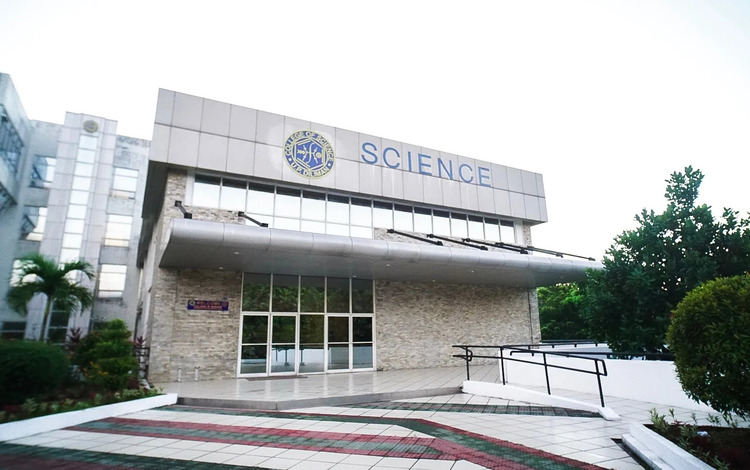
The study, led by Cris Gino Mesias and Dr. Gerry Bagtasa from the UPD College of Science’s Institute of Environmental Science and Meteorology (IESM), employs machine learning to connect historical typhoon tracks with corresponding rainfall data. By recognizing patterns in storm behavior, the model provides forecasts of potential rainfall distribution.
According to Bagtasa, most rainfall predictions for tropical cyclones currently rely on dynamic models, which require extensive computational power and advanced systems. “These models are difficult to run as they need high-performance computing resources,” he explained in an article published on the UPD College of Science website.
In contrast, the AI model can operate on a standard laptop and deliver results within minutes. “When we evaluated the AI model, its predictive accuracy was comparable to a dynamic model that we regularly use. In fact, the AI system demonstrated better performance when forecasting extreme rainfall from tropical cyclones,” Bagtasa said.
The model’s predictions are largely influenced by a cyclone’s proximity and duration. Typhoons that move slowly or pass closer to land tend to generate heavier rainfall, making such forecasts vital for disaster preparedness.
“This AI model is not perfect, but it provides an additional tool for rainfall forecasting,” Bagtasa noted. “It can help disaster managers by offering more timely and accessible information on possible hazards.”
The researchers emphasized that the AI model is not meant to replace existing forecasting systems but rather complement them. Its ability to update with new data ensures continuous improvement in accuracy over time.
Bagtasa also underscored the importance of AI literacy, clarifying that not all AI models function the same way. Unlike large-scale AI systems such as ChatGPT or Gemini, which demand significant computing power, the weather-focused AI developed by UP scientists is energy-efficient and accessible.
The study, titled “AI-Based Tropical Cyclone Rainfall Forecasting in the Philippines Using Machine Learning,” was published in the journal Meteorological Applications. It was supported by the Department of Science and Technology–Accelerated Science and Technology Human Resource Development Program (DOST-ASTHRDP) and the DOST-Philippine Council for Industry, Energy, and Emerging Technology Research and Development (DOST-PCIEERD).