
The death of Pope Francis marks a significant moment in the history of the Roman Catholic Church, as for the first time, artificial intelligence is stepping in to make predictions about who will be the next head of the Church. While AI tools like ChatGPT have often been used to predict potential global conflicts or analyze futuristic weaponry, using AI to foresee the election of the pope is a rather optimistic and groundbreaking approach.
For nearly 2,000 years, the process of selecting a new pope has been a highly secretive and sacred affair. The College of Cardinals, currently composed of 135 eligible cardinals under the age of 80, will soon convene in the Sistine Chapel to elect the next leader of the world’s largest Christian denomination. The new pope will emerge when a candidate secures two-thirds of the votes, and the iconic white smoke rises from the chapel’s chimney, signaling the decision to the world.
So, who is the likely frontrunner? According to AI, particularly OpenAI’s ChatGPT, the most probable candidate to succeed Pope Francis is Cardinal Pietro Parolin, the current Secretary of State of the Vatican. Parolin’s candidacy is seen as one of continuity, making him a viable candidate for both traditionalists and reformists within the Church. Having served in the Vatican’s diplomatic office for over a decade, Parolin is recognized for his diplomatic skills, fluency in several languages, and his ability to navigate complex international relations.
AI’s prediction of Parolin’s candidacy is grounded in the fact that he is viewed as a “safe compromise” who can bridge divides within the Church, particularly among European and Latin American cardinals. Parolin is not a radical reformer, but he is not a staunch conservative either, making him an appealing choice if the cardinals cannot unite behind a more progressive candidate.
However, his candidacy is not without challenges. While Parolin is a popular choice among many, his involvement in the Vatican’s financial scandal, particularly the controversial London real estate deal, could tarnish his reputation. Despite this, AI suggests that his strengths in diplomacy and his role as a steady leader in uncertain times make him a leading contender.
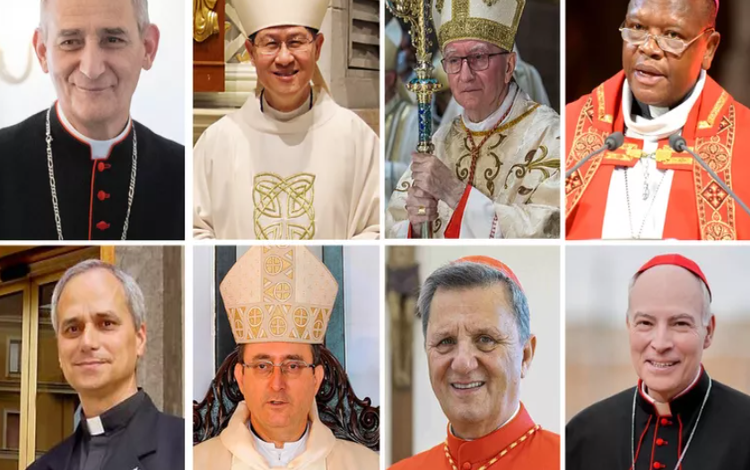
Other cardinals, such as Luis Antonio Gokim Tagle from the Philippines, Fridolin Ambongo Besungu from the Democratic Republic of Congo, and Matteo Zuppi from Italy, are also close contenders. Betting markets, particularly the cryptocurrency-fueled platform Polymarket, show tight odds between Parolin and Tagle, with Parolin currently leading at 28%, closely followed by Tagle at 25%.
While ChatGPT offers valuable insights, the ultimate decision remains in the hands of the cardinals, and until the white smoke rises, the world can only speculate on who will take the reins of the Roman Catholic Church next.